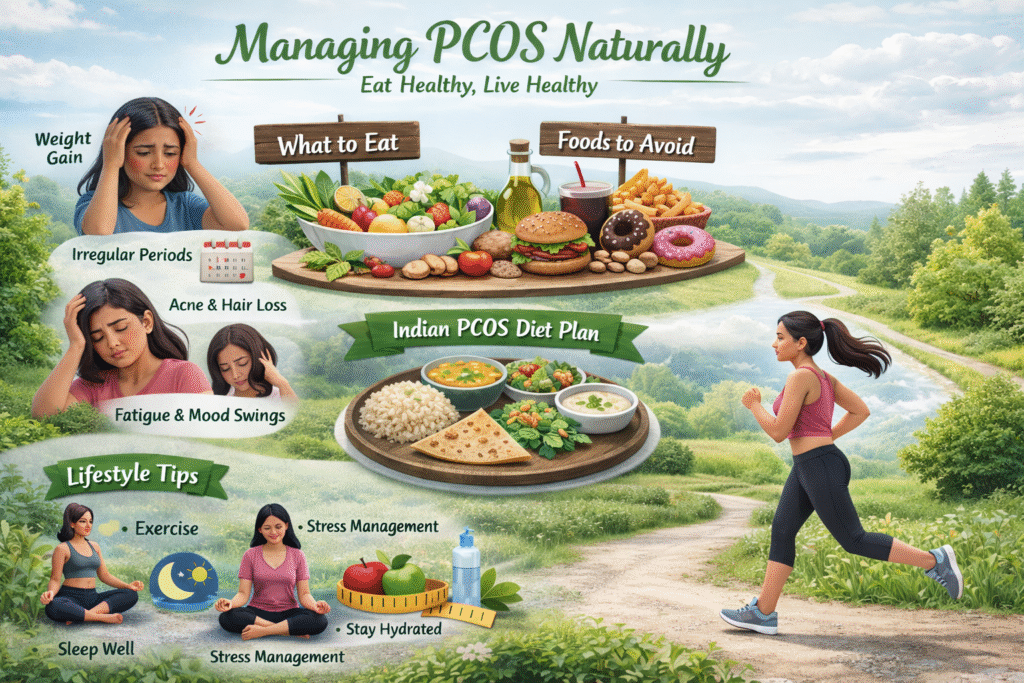
PCOS (Polycystic Ovary Syndrome) is a common hormonal condition affecting many women today. In fact, symptoms such as weight gain, irregular periods, acne, hair fall, and low energy are often linked to PCOS.
However, the good news is that PCOS can be managed effectively with the right diet and lifestyle. Most importantly, following a balanced Indian PCOS diet plan helps improve hormone balance, control insulin levels, and support overall health.
In this blog, you will learn:
- What to eat in PCOS
- What foods to avoid in PCOS
- A simple Indian PCOS diet plan
- Lifestyle tips for better results
Why Diet Is Important for PCOS
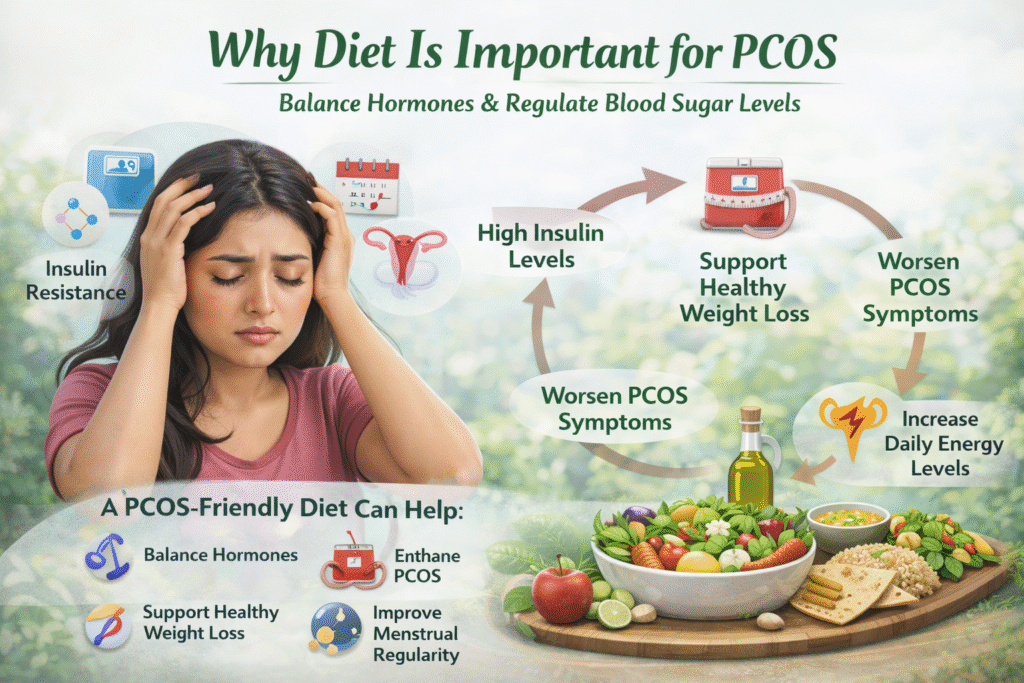
PCOS is closely linked to insulin resistance and hormonal imbalance. As a result, when insulin levels remain high, the body stores more fat and PCOS symptoms become worse.
Therefore, diet plays a key role in managing PCOS naturally. In addition, a PCOS-friendly diet helps regulate blood sugar levels and reduce inflammation.
A proper PCOS diet can help:
- Balance hormones
- Support healthy weight loss
- Improve menstrual regularity
- Increase daily energy levels
What to Eat in PCOS (Indian Food Guide)
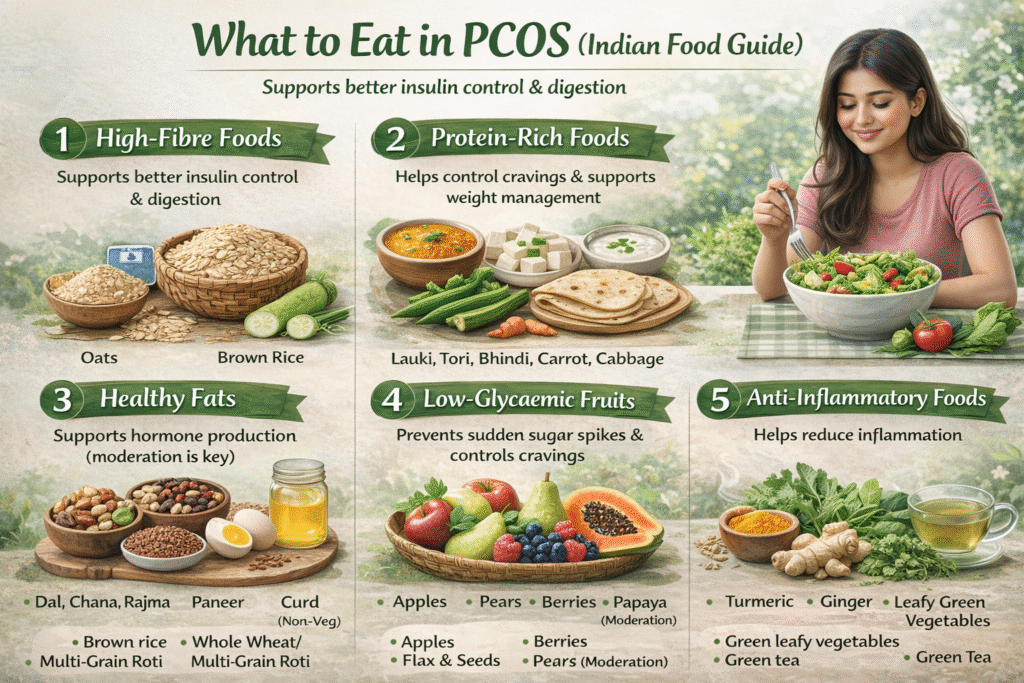
1. High-Fibre Foods
Fibre helps slow down sugar absorption and improves digestion. As a result, it supports better insulin control.
Best Indian options include:
- Oats
- Brown rice
- Whole wheat or multigrain roti
- Vegetables like lauki, tori, bhindi, carrot, cabbage
2. Protein-Rich Foods
Protein is essential for hormone health. Moreover, it helps control cravings and supports weight management.
Include foods such as:
- Dal, chana, rajma
- Paneer
- Curd
- Eggs (if non-vegetarian)
3. Healthy Fats
Healthy fats are important for hormone production. However, they should always be consumed in moderation.
Good sources include:
- Nuts and seeds
- Flaxseeds
- Walnuts
- Desi ghee (small quantity)
4. Low-Glycaemic Fruits
Low-GI fruits prevent sudden sugar spikes. Therefore, they are a better choice for PCOS management.
Best options are:
- Apples
- Pears
- Berries
- Papaya (in moderation)
5. Anti-Inflammatory Foods
PCOS is often associated with inflammation. That’s why, including anti-inflammatory foods is very helpful.
Examples include:
- Turmeric
- Ginger
- Green leafy vegetables
- Green tea
Foods to Avoid in PCOS
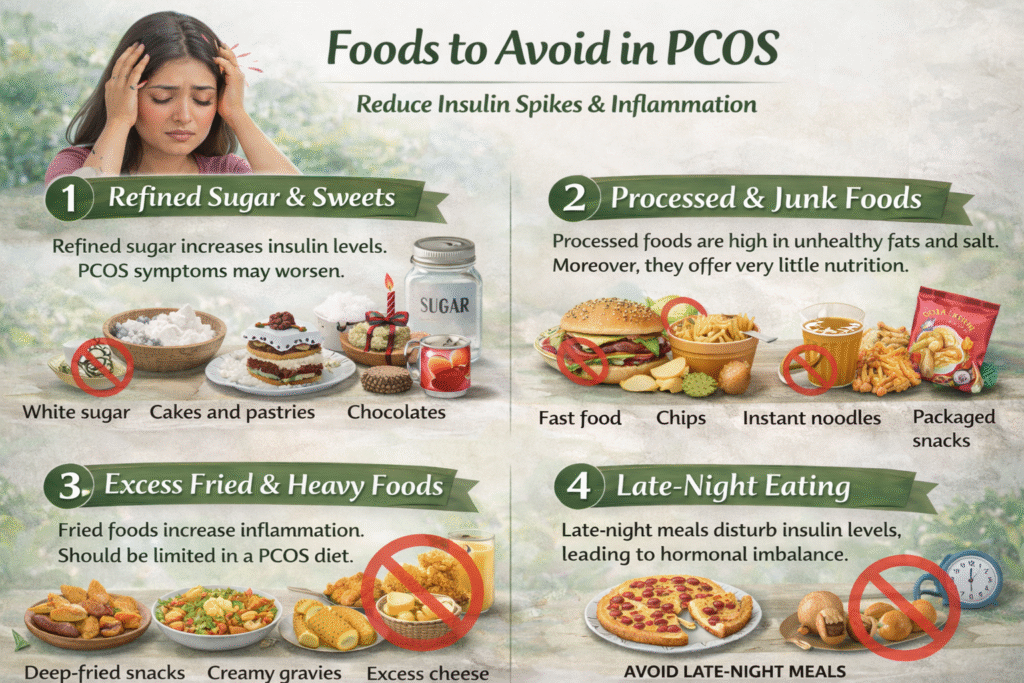
1. Refined Sugar & Sweets
Refined sugar increases insulin levels. As a result, PCOS symptoms may worsen.
Avoid:
- White sugar
- Cakes and pastries
- Chocolates
- Soft drinks
2. Processed & Junk Foods
Processed foods are high in unhealthy fats and salt. Moreover, they offer very little nutrition.
Avoid:
- Fast food
- Chips
- Instant noodles
- Packaged snacks
3. Excess Fried & Heavy Foods
Fried foods increase inflammation. Therefore, they should be limited in a PCOS diet.
Avoid:
- Deep-fried snacks
- Creamy gravies
- Excess cheese and butter
4. Late-Night Eating
Late-night meals disturb insulin levels. As a result, hormonal imbalance can increase.
Lifestyle Tips to Manage PCOS Naturally
Along with diet, lifestyle changes are equally important. For example, regular physical activity improves insulin sensitivity.
- Walk or do yoga for 30 minutes daily
- Maintain consistent meal timings
- Get 7–8 hours of quality sleep
- Practice stress management through meditation or breathing exercises
Conclusion
PCOS is not a disease but a manageable condition. With the right diet and lifestyle, many women see noticeable improvement in symptoms. Most importantly, consistency matters. Since every body is different, a personalized PCOS diet plan delivers the best long-term results.
👉 Start your PCOS wellness journey today. Book your personalized diet plan with Fitness Adda now.